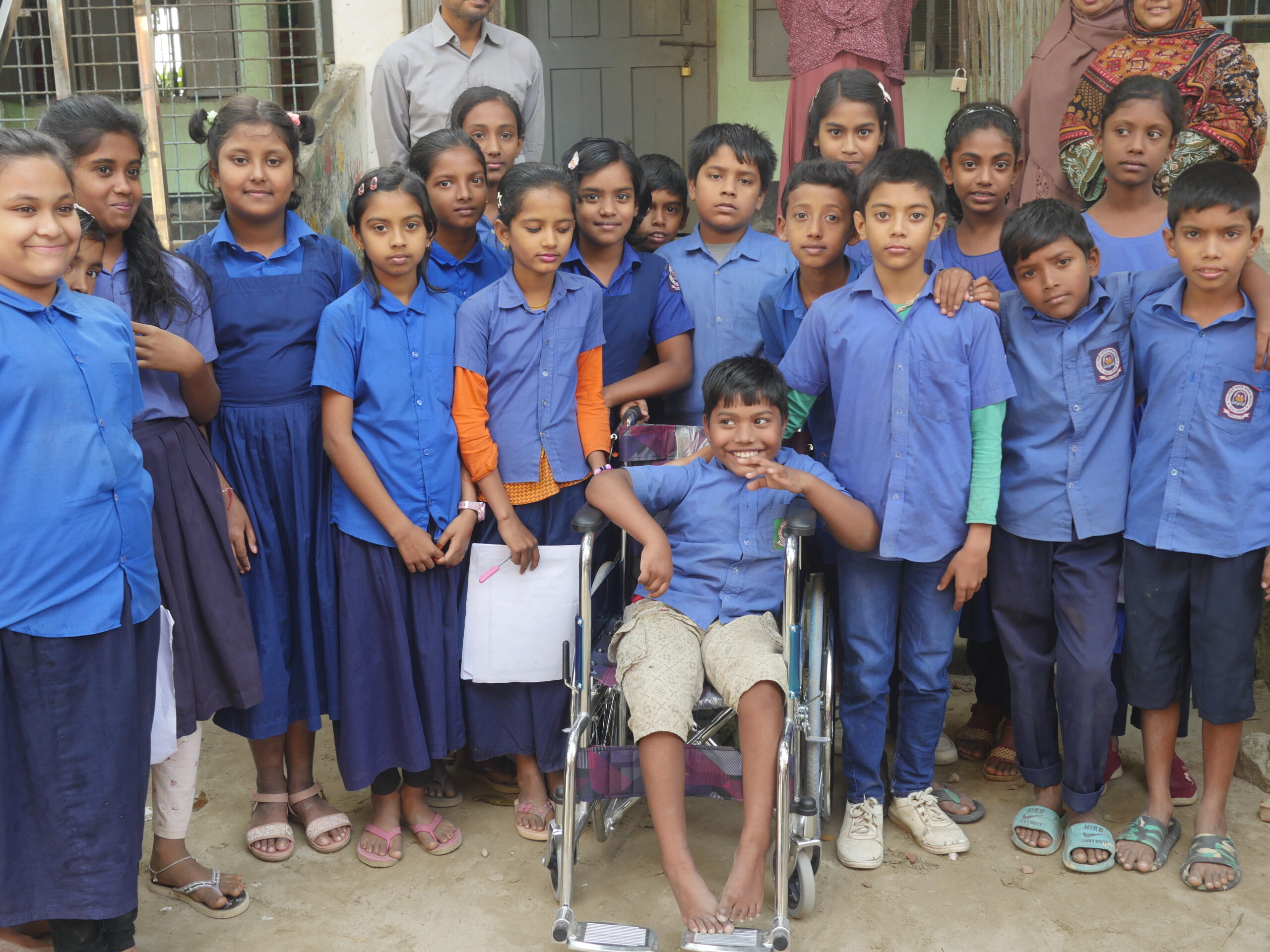
The right to education is enshrined in the Universal Declaration of Human Rights and in the UN Convention on the Rights of the Child.
Inclusion is one of the major challenges facing education systems around the world. In any classroom there is a wide range of learners and thus a wide range of learning support needs that a teacher needs to take into account when planning and teaching and when assessing learning. Classrooms are not homogenous and should not be treated or taught as if they were.
Inclusive education recognizes that every child has unique characteristics, interests, abilities and learning support needs and therefore, if the right to education is to mean anything, education systems must be designed and implemented to value each learner and help all of them to reach their potential – which will be different for different children! Most learners that experience difficulties do not need different or “special education”, but they need more flexible and individualized education.
The Myth of “Special” Versus “Ordinary” Learners
It is a myth that there are different categories of learners such as those with “special” and with “ordinary” needs. Education systems have clung to this myth against better judgment, and continue to use undifferentiated instruction as the norm. And thus, there are also no “special needs” children. All children have the same needs of belonging, love, friendship, safety, health, stimulation and self-esteem. “Special needs” has become a new stigmatizing label, which reinforces the deeply entrenched deficit views of ‘difference‘, which define certain learners as ‘lacking something’.
Special needs labels are not useful for teachers as they say little about how to teach a certain child. Furthermore, a teacher may have two learners with the same disability who need very different teaching-learning approaches, simply because children with disabilities are as different from each other as any other group of children.
There Is No Special Education—Only Good Education
There is no “special education” – just education, which can only be of good quality if it is inclusive of, and responsive to learning diversity. Good teaching is good teaching for all children, because good teachers look for a child’s individual strengths as well as learning support needs, and address those effectively.
Inclusive education focuses on what children can do and on their potential for further learning, based on the philosophy that every child can learn, just not always the same things, during the same time, with the same results. That is human diversity!
Support Makes Inclusion Possible
An effective support system is critical if schools are to become inclusive. ’Support’ includes everything that enables children to learn. The most important forms of support are available to every school: children supporting children, teachers supporting teachers, parents becoming partners in the education of their children, and communities supporting their local schools.
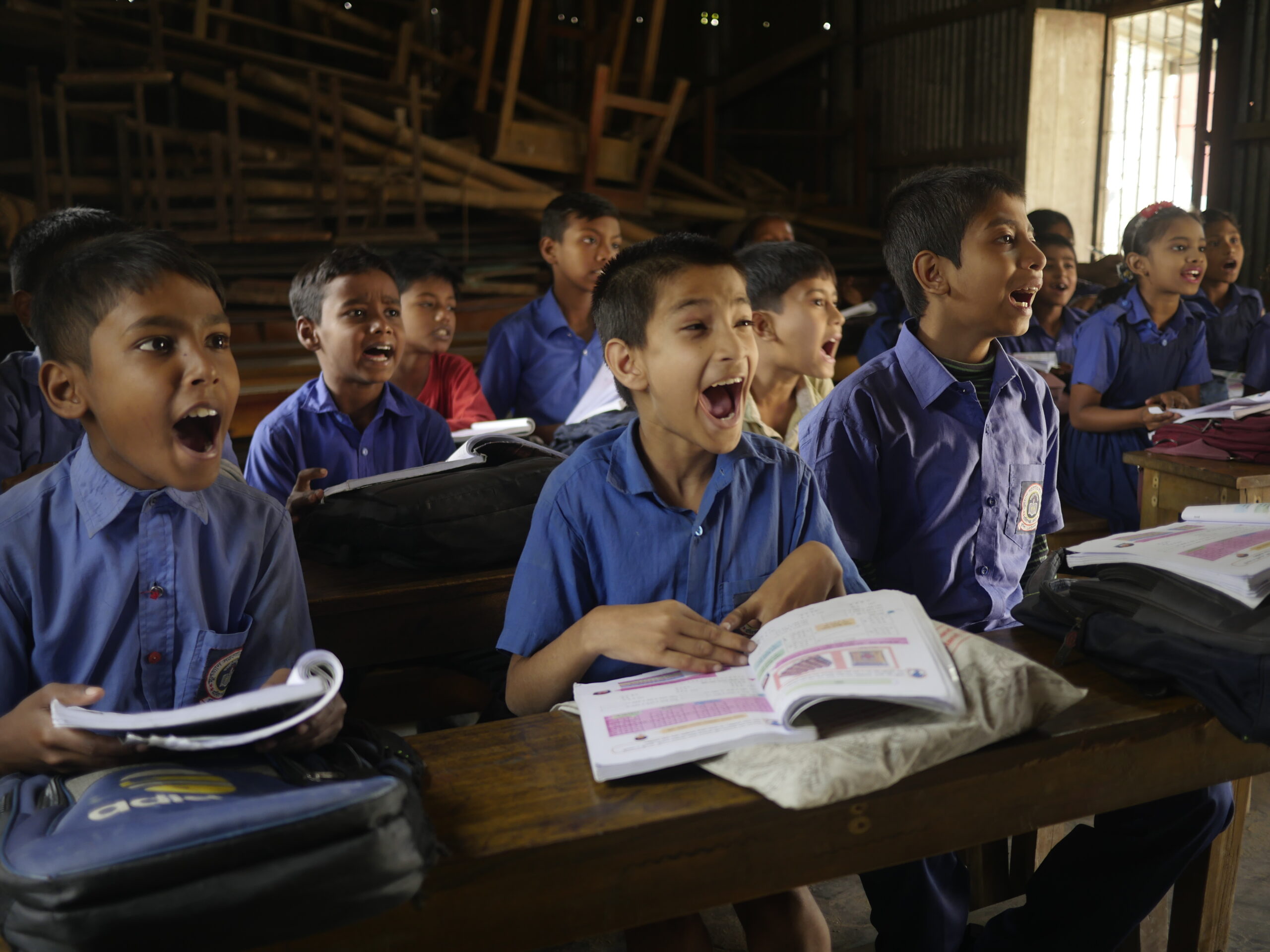
Inclusive schools welcome children of all abilities, by placing learners together according to age and without regard of ability level. Years of research has shown that there are significant academic, social, emotional, and physical benefits to teaching children with and without disabilities or learning difficulties in the same class setting, for both those with and without disabilities/learning difficulties.