Books are a wonderful way to help children understand that people with disabilities are often just like them – with the same dreams, ambitions, passions and sense of humour. At the same time, they offer children with disabilities the opportunity to see themselves represented in storybooks and give them successful role models.

But… some children find reading difficult. Think of children with dyslexia, motor impairments, visual challenges or concentration disorders. That is why Niketan and Biblionef have now released the children’s book ‘My Name is Runa’ as an audiobook. The audiobook, which includes visual images, is available in three languages: Dutch, English and Bengali.

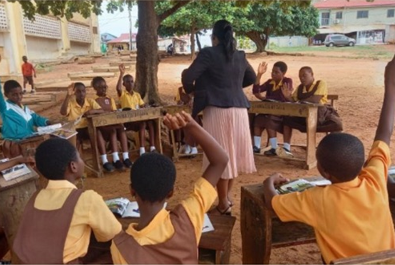
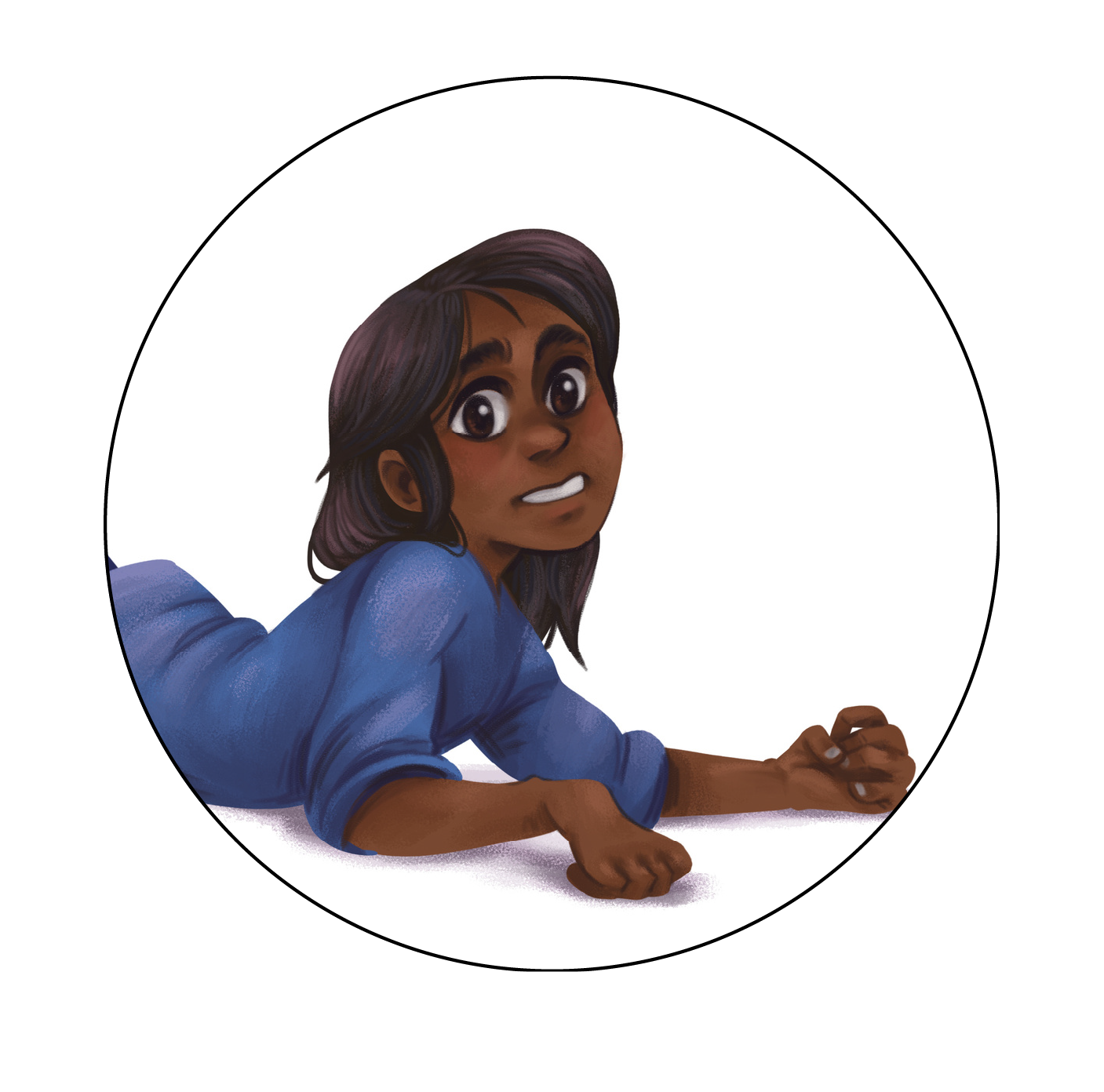
My Name is Runa is the true story of a girl named Runa who lives in Bangladesh and has cerebral palsy. The book is used in schools in Bangladesh, Ghana and Uganda.
Ghana Ghana
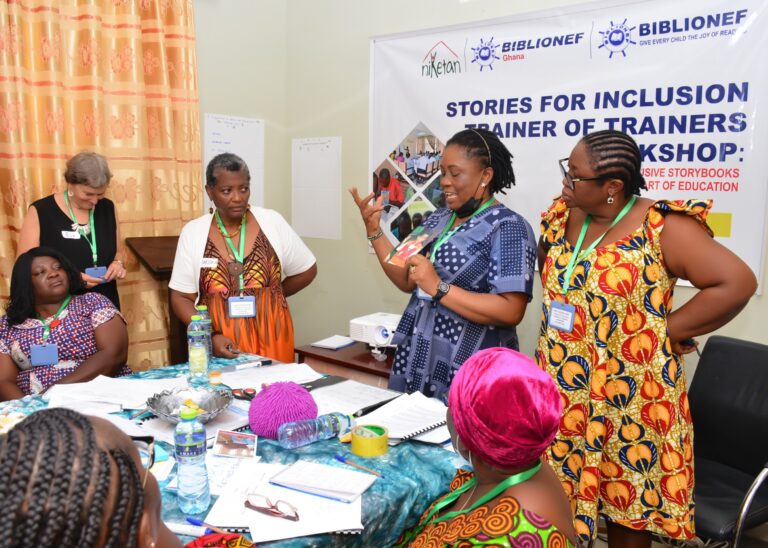
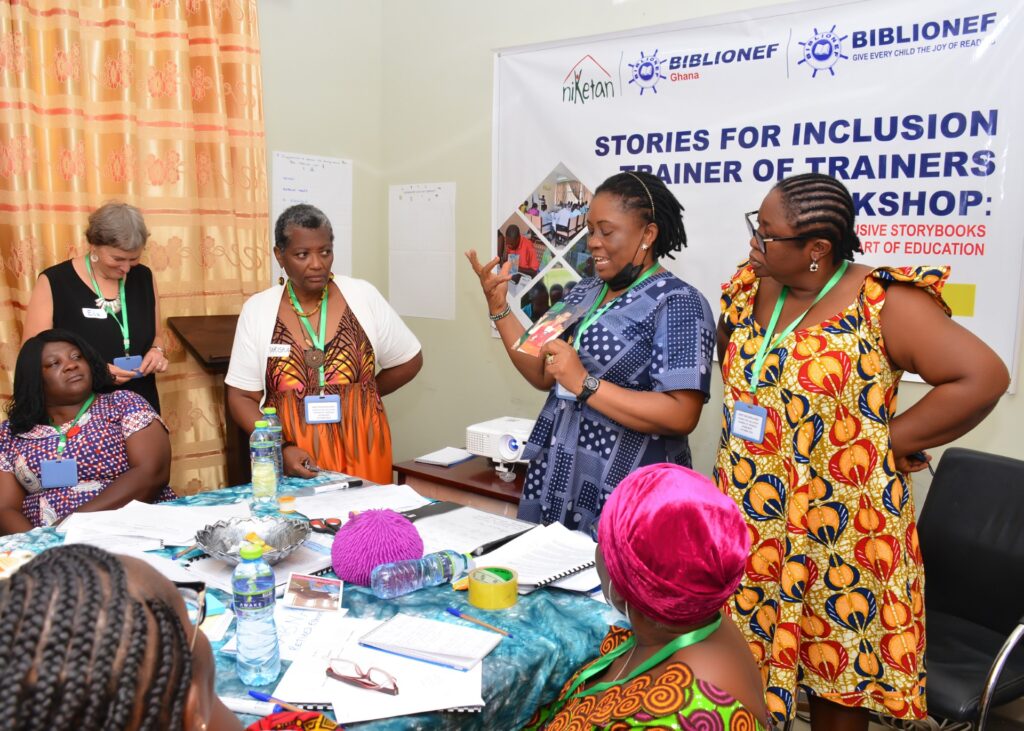
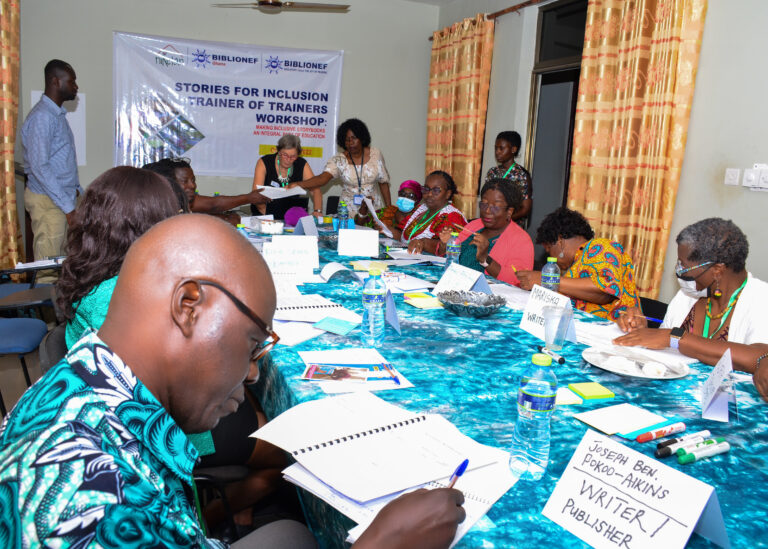
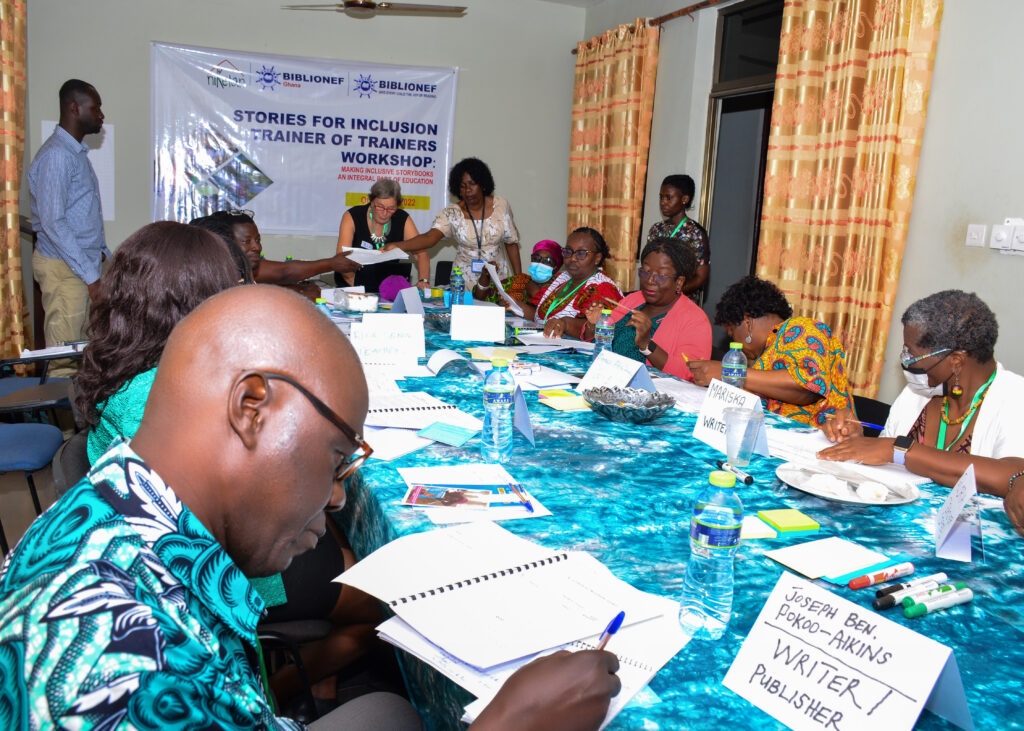
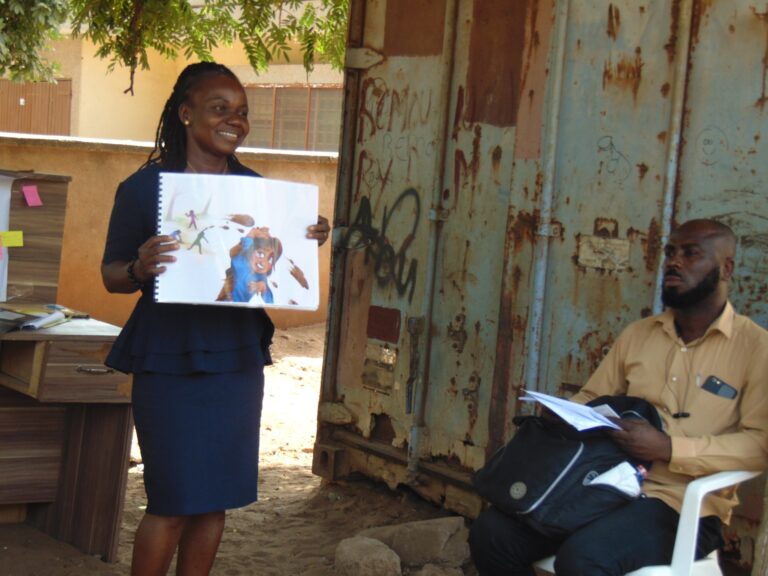
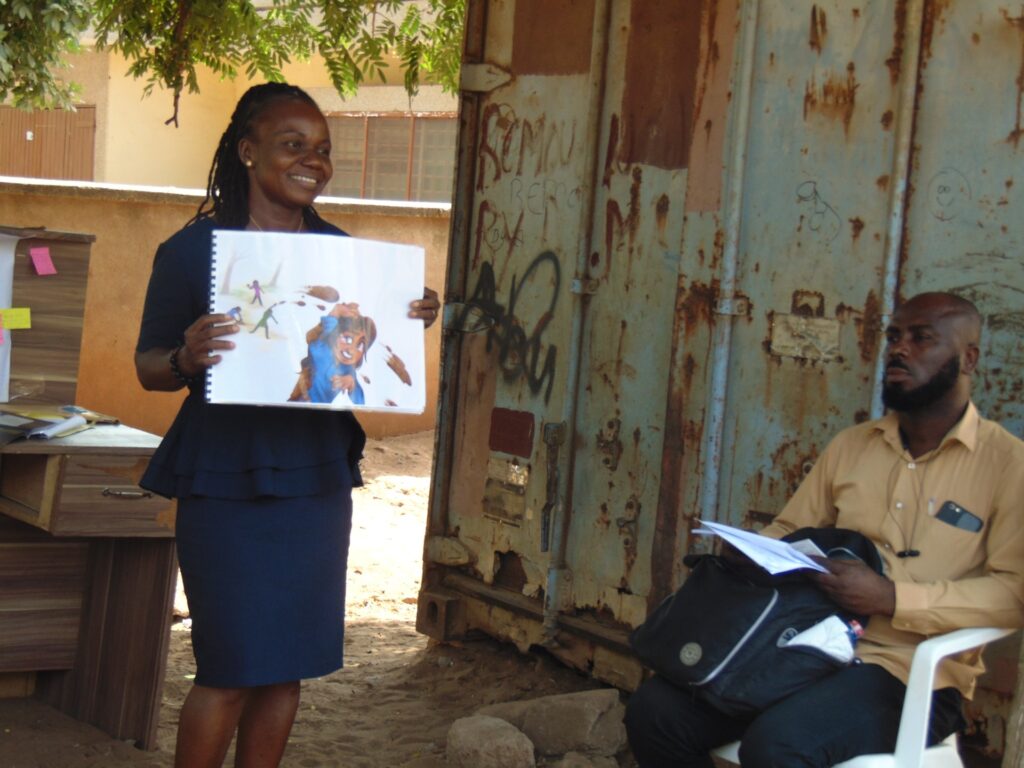
Workshop participants came from different backgrounds, ranging from teachers and representatives of the education service department to members of the Writers’ Association and Biblionef-Ghana. Participants were actively engaged, in plenary and group sessions, and they enjoyed the workshop.

“We try to implement inclusive education because it is in the policy.” Workshop participant

Most participants had some knowledge about disability and inclusive education. Because of the workshop and the discussions, they became aware of the diversity among learners with a disability and the uniqueness of every child, even if having the same disability. The disability inclusive storybooks highlighted the importance of identifying each child’s individual strengths and weaknesses, rather than focusing on what a child cannot do and labelling children as having “special needs” or “disabilities”.
In addition, it was important to learn how to change the terminology we use for children with disabilities, because the words we use tend to be negative and hurtful. Also, the broader issues impacting disability became clearer (“It is not just a physical disability; there are also financial and social consequences when you have a child with disabilities”).

Ghana Ghana

“Maybe we should start disability awareness in the community and work with parents to change attitudes towards children with disabilities, then half our problem could be solved.”

Workshop participant