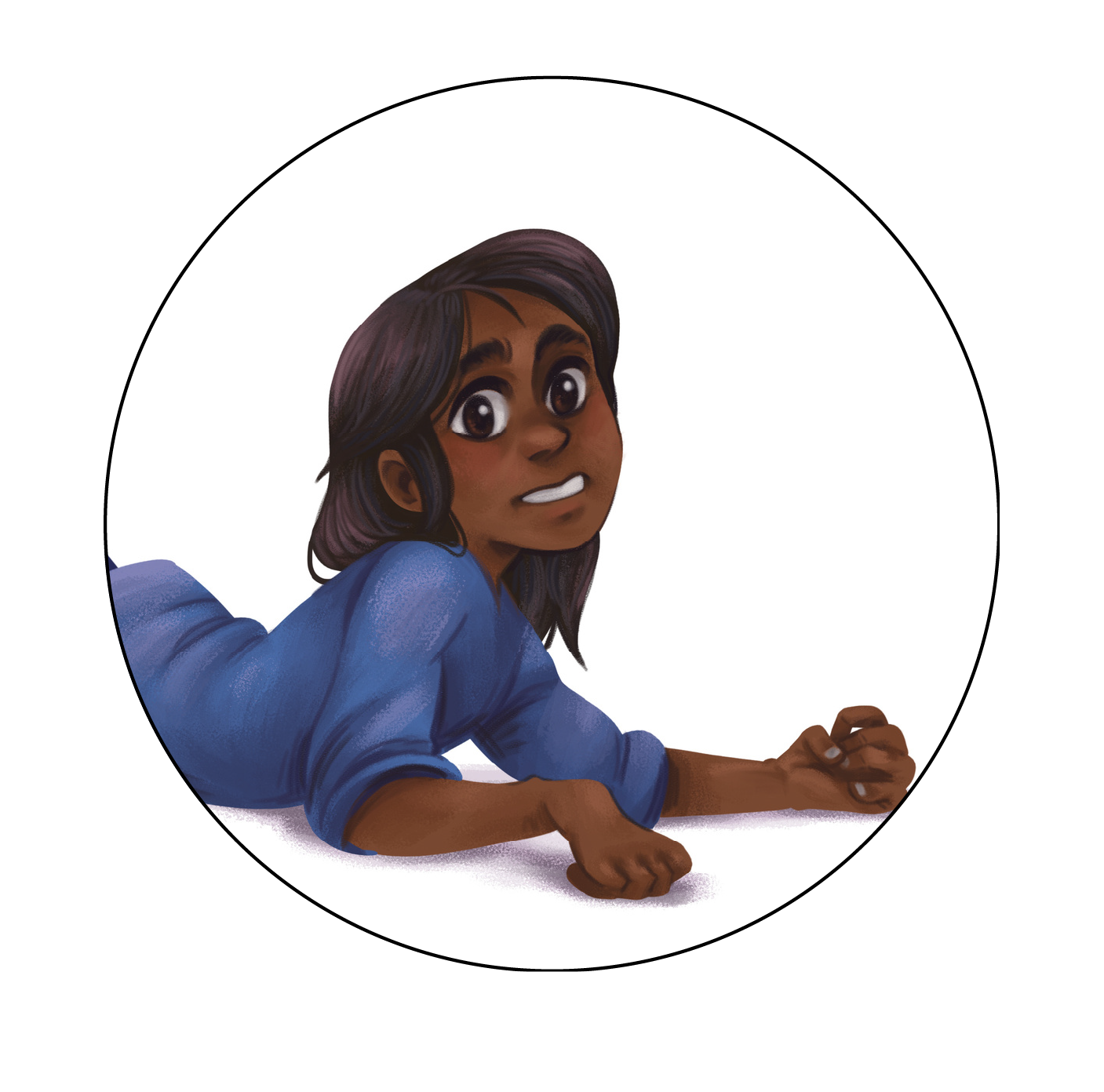
In February 2026, we launched the pilot project Stories for Inclusion Uganda with inception meetings in Pakwach and Nebbi Districts in Northern Uganda, with technical support from Biblionef Netherlands. ProVictimis (Switzerland) funds the pilot, with additional support from UNESCO Netherlands.

We build on successful experiences in Bangladesh and use storybooks to promote inclusive education. During the pilot year, we are working with eight schools, focusing on pre-primary and lower primary classes.

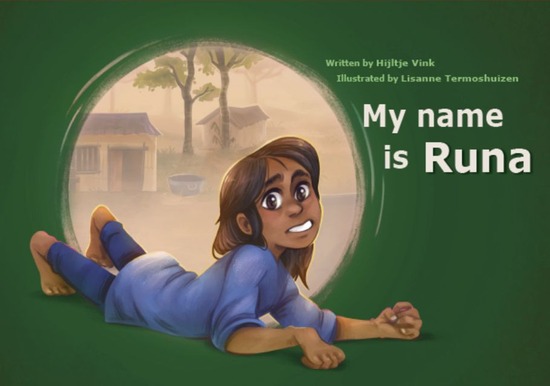
We brought storybooks from Bangladesh, including My Name is Runa, from the Netherlands and collected additional inclusive storybooks at Pangea Publishing House in Kampala. Each pilot school will receive a small “mini-library” of inclusive storybooks. At the same time, we are exploring the development of a new storybook in Uganda, which we plan to share later with Bangladesh and Sri Lanka, where partners are preparing similar activities.

We are currently seeking funding to continue the project after the first pilot year.

Uganda Uganda
Training teachers and building a community
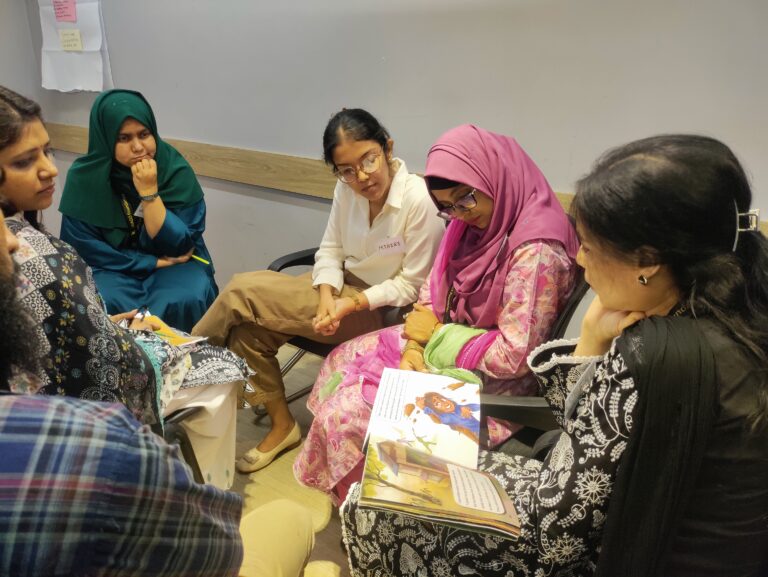
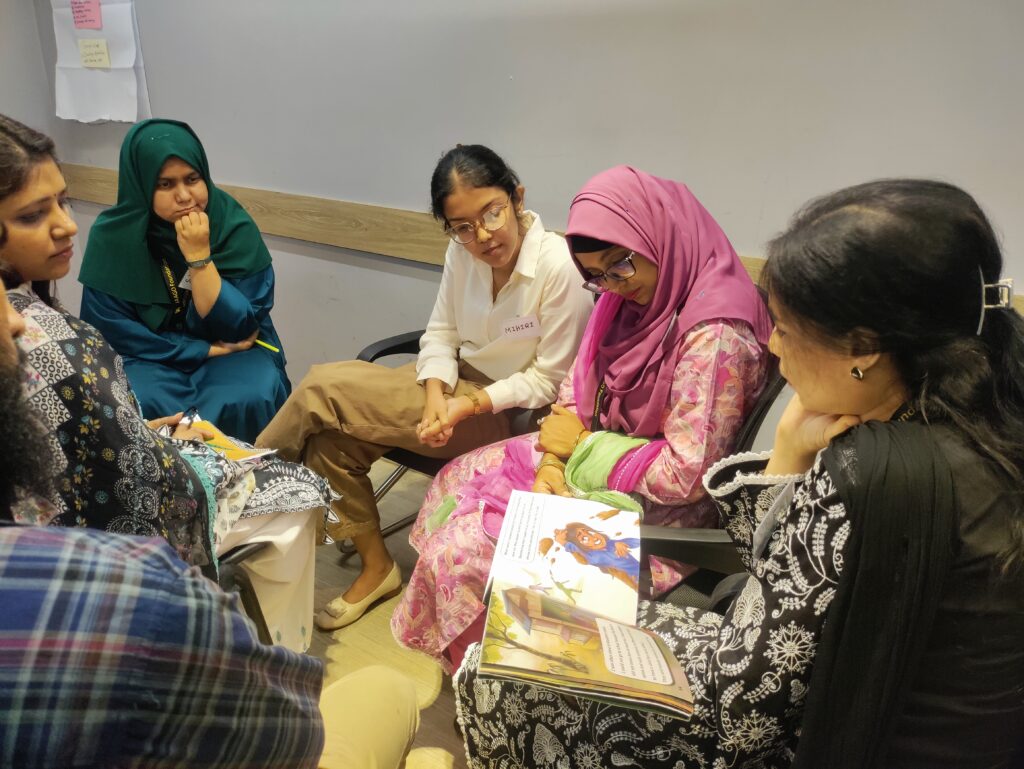
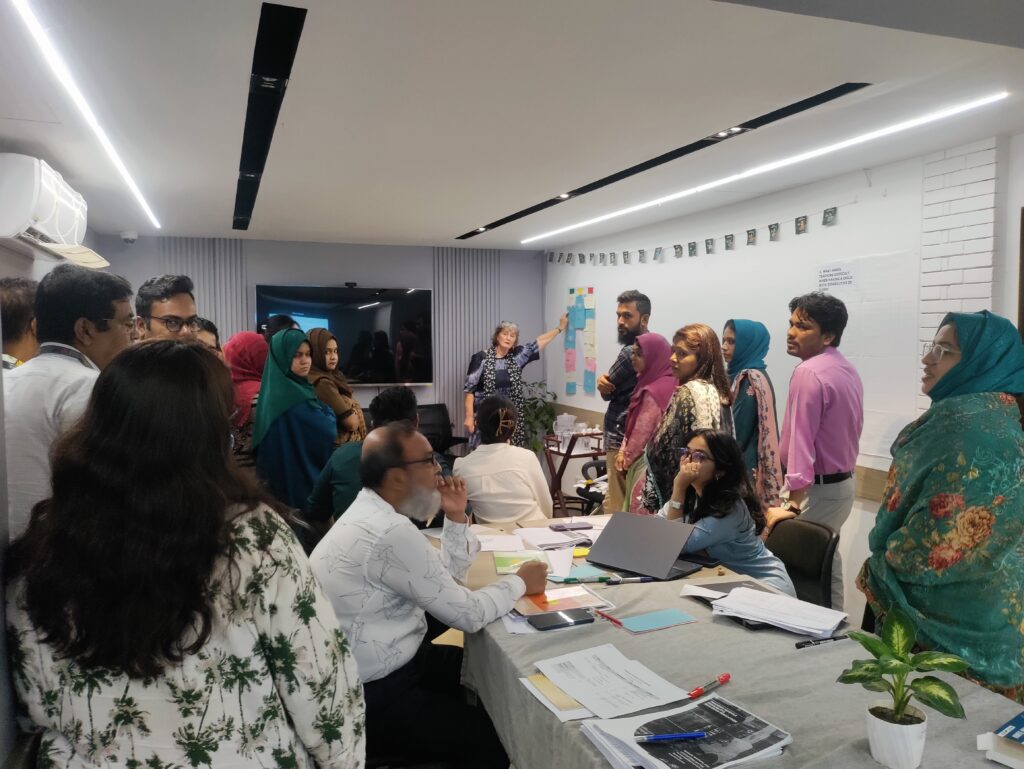
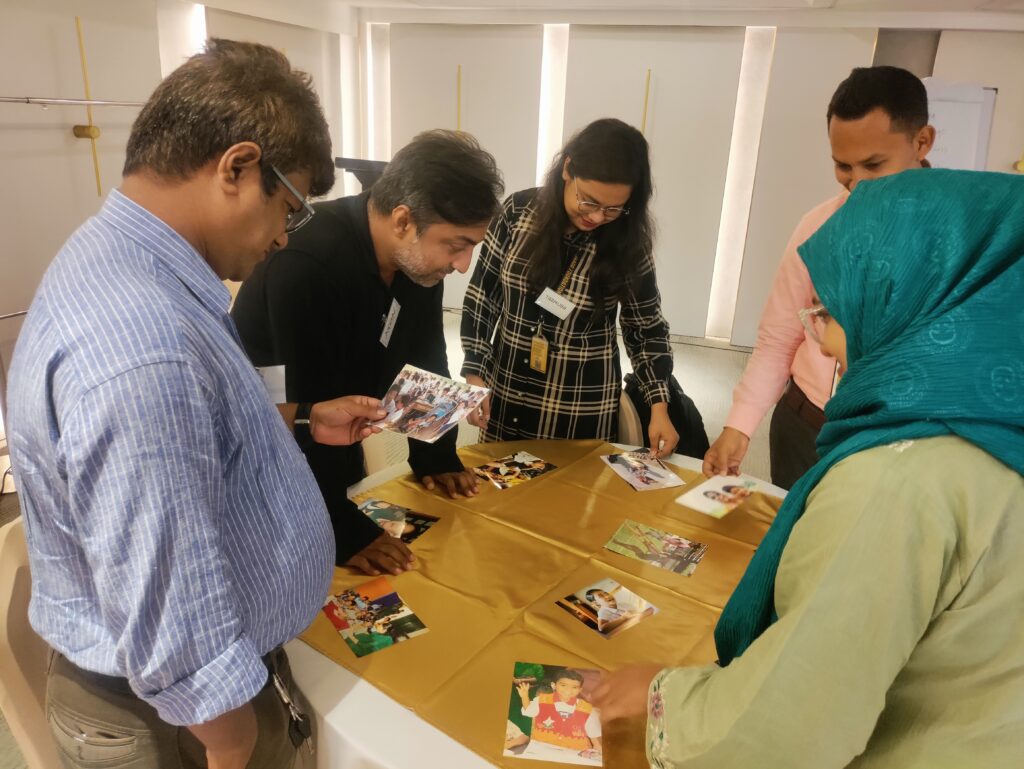
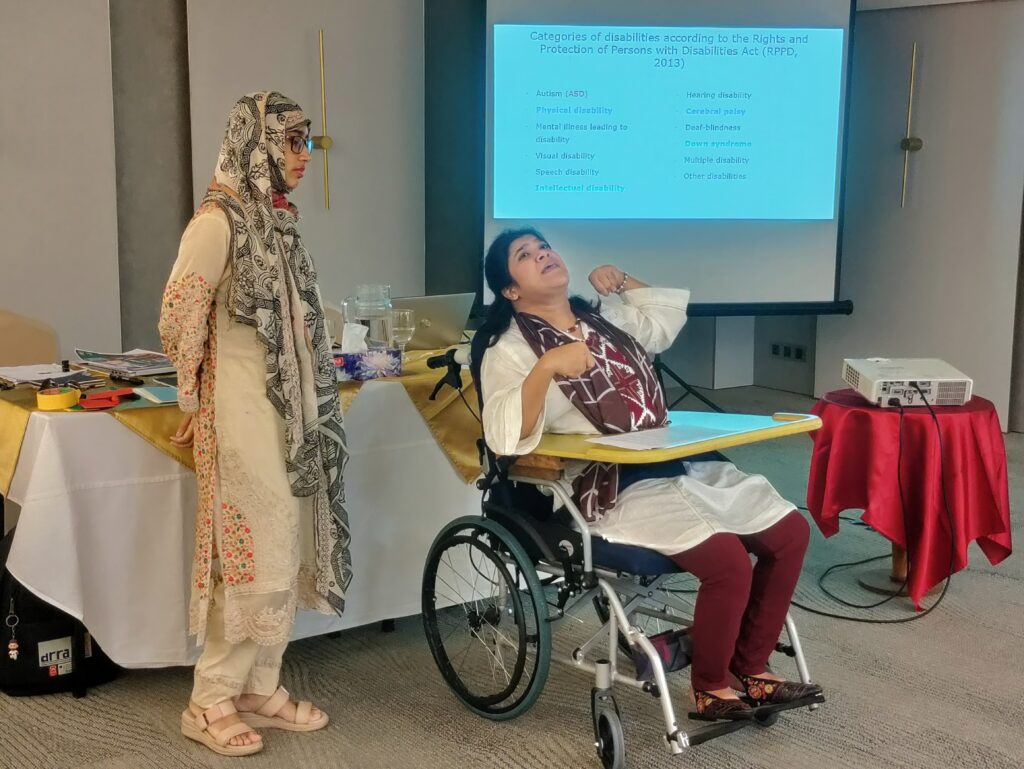
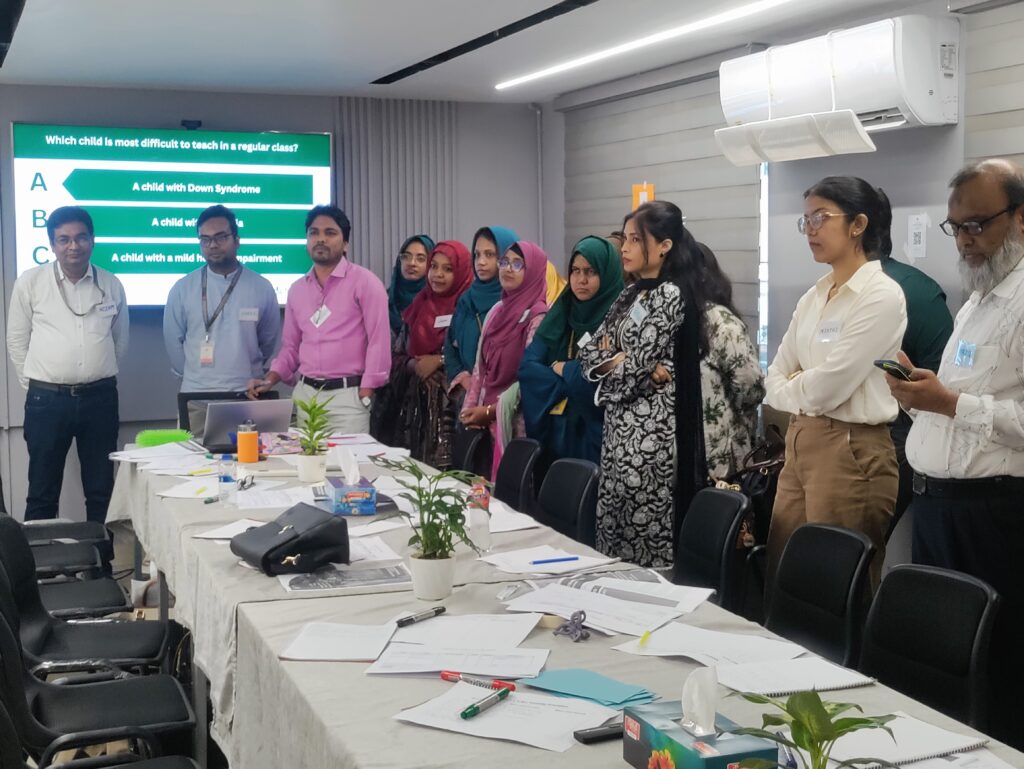
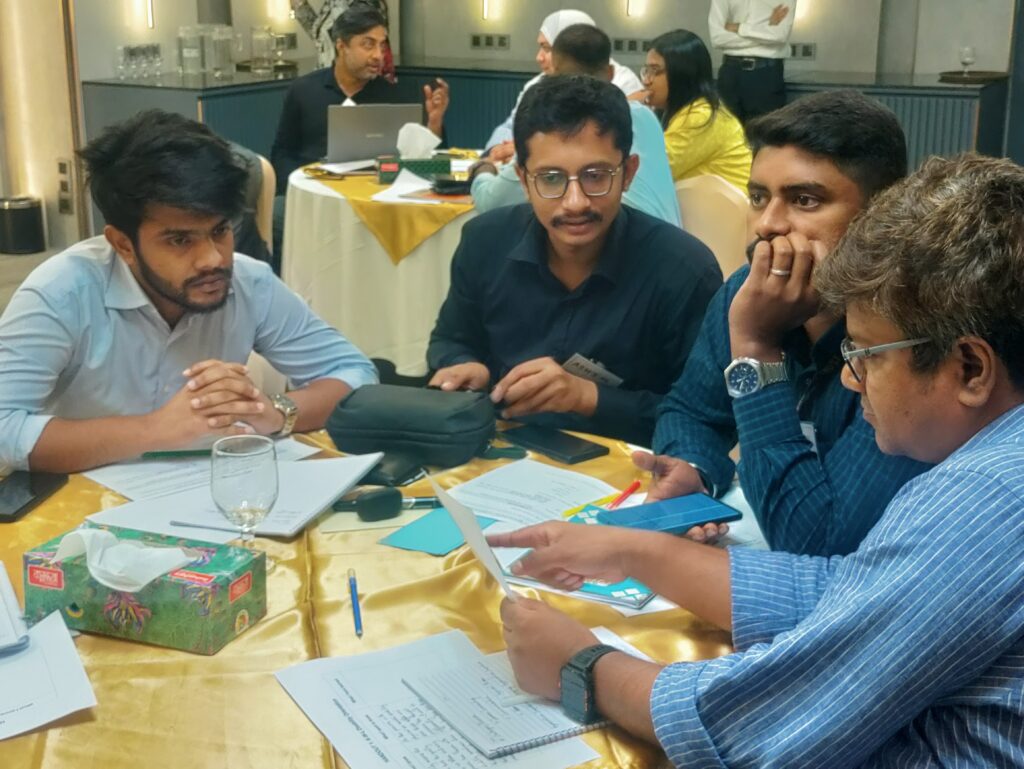
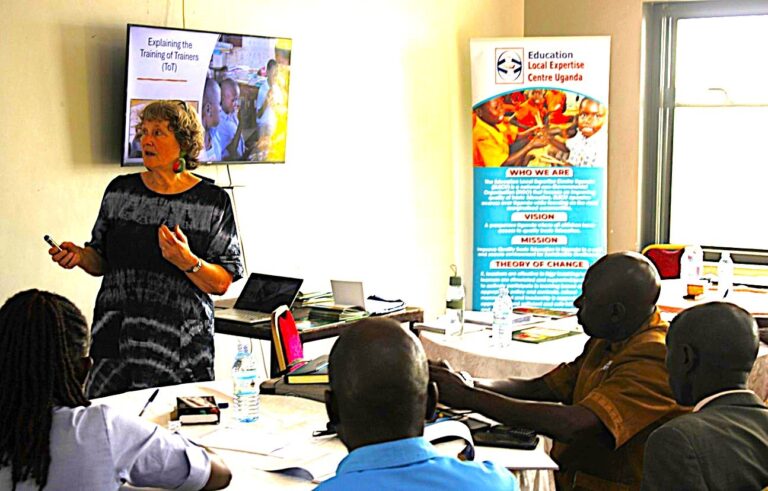
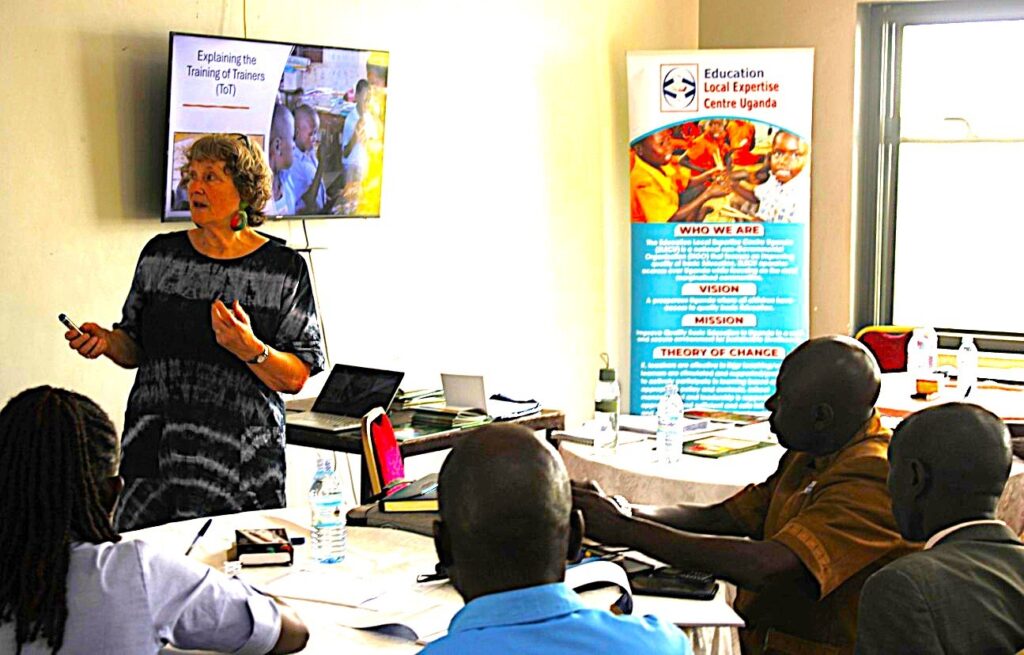
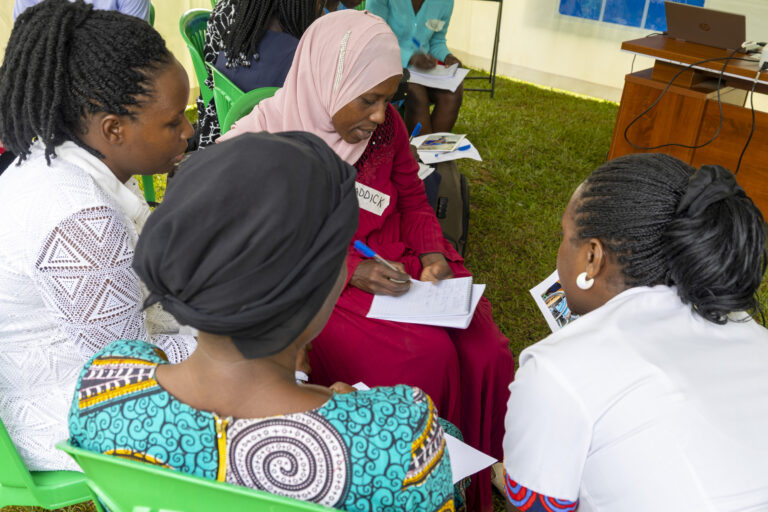
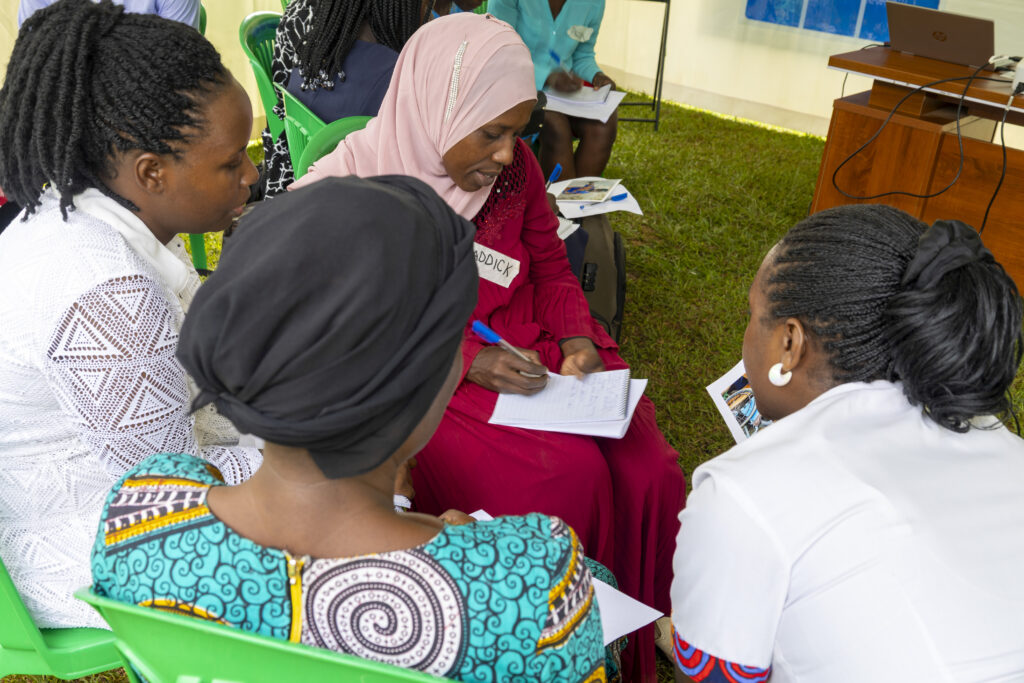
A Training of Trainers workshop was held in Pakwach, bringing together trainers, district education staff, and school leaders. The workshop built on the experience of the participants and led to the creation of a Community of Practice, so that teachers and trainers in both districts can continue to learn from each other.

Participants also helped to adapt the teacher training materials to better fit the Ugandan context.

“Our goal is that teachers learn how to recognise and remove barriers that exclude children with disabilities, so that every child can participate and enjoy equal rights.”

In Uganda, storybooks are widely used in early grades as part of the thematic curriculum. However, teachers, parents and community volunteers need guidance on how to use stories in different ways — for reading lessons, library time, class discussions, or role-play activities.
Although English is taught in school, local languages are used in daily teaching. In Pakwach this is Leb Jonam, and in Nebbi Alur, which means that stories often need to be told in the local language as well.

With strong cooperation between schools, communities and local partners, Stories for Inclusion Uganda has made a promising start toward more inclusive classrooms where every child belongs.

Runa story Runa story
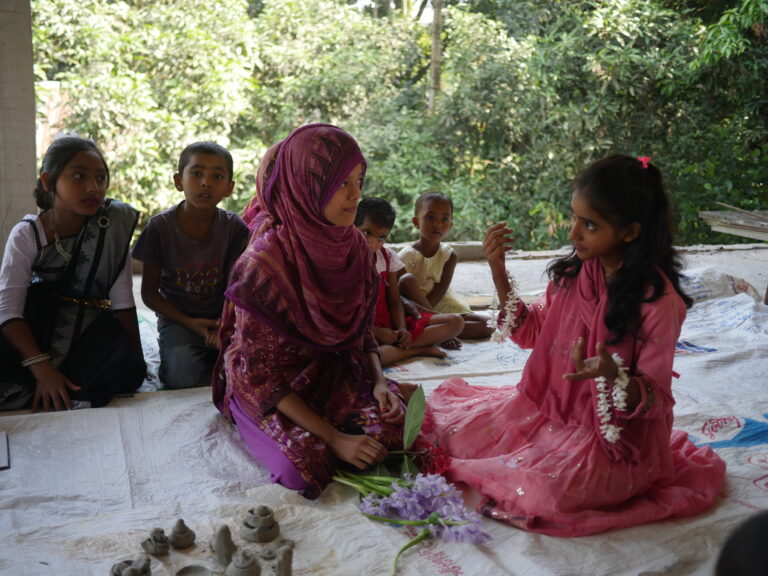
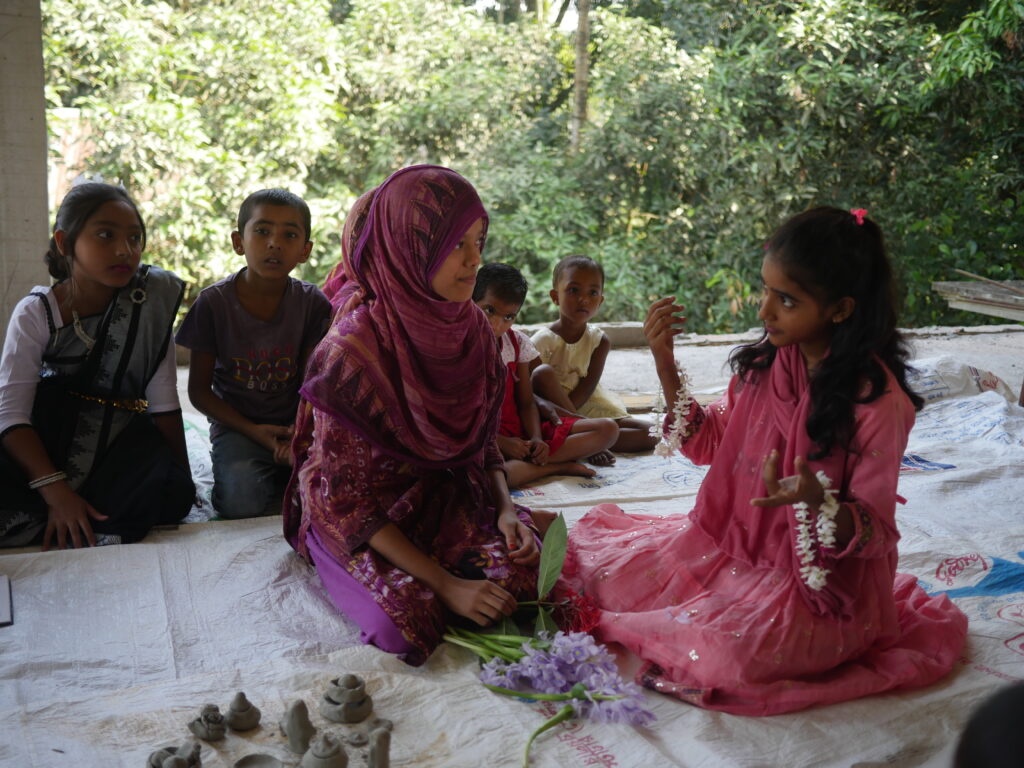
My name is Sultana Akter. I am 12 years old and live in the village of Taluknagor. A volunteer from DRRA visited our village several Fridays and told us about Runa. The story “My Name is Runa” touched me deeply.

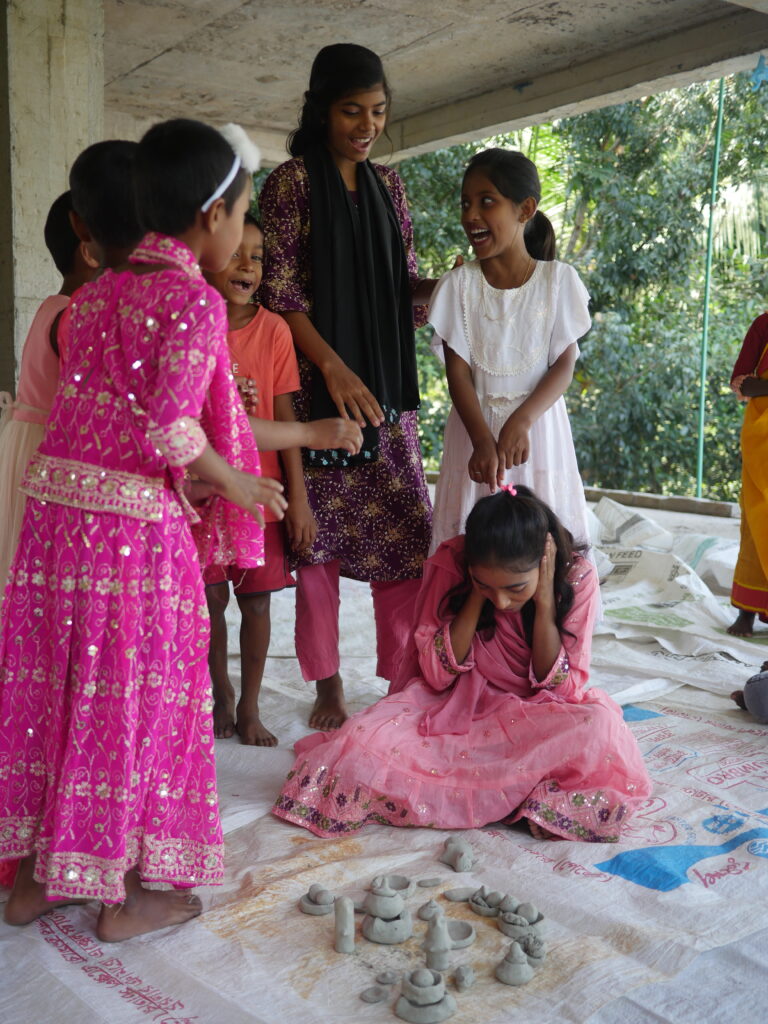
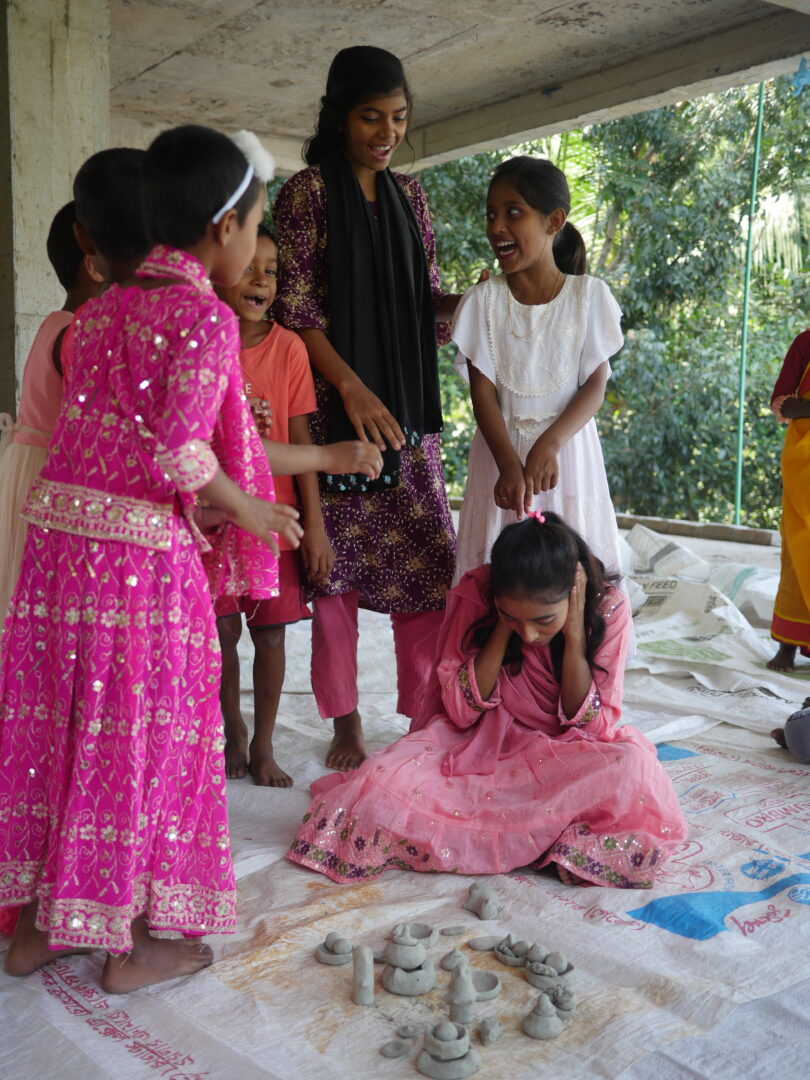
Together, we turned the story into a play, in which I take on the role of Runa. When the other children in the play call me foolish, I truly feel the pain Runa must have experienced. That is what makes it so powerful for me.

I also shared the story and the book with my classmates. They were just as moved as I was. My classmates promised they would never wrong children with disabilities, but instead support them. I am proud to have changed their perspective on people with disabilities.

In the future, I would like to work with people with disabilities. I am grateful to those who showed us and our community that children with disabilities are no different from us.

Quiz Quiz

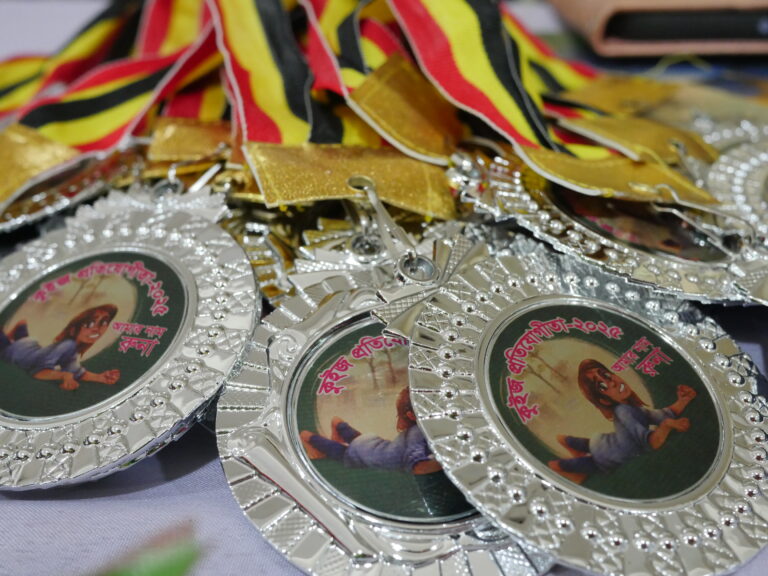
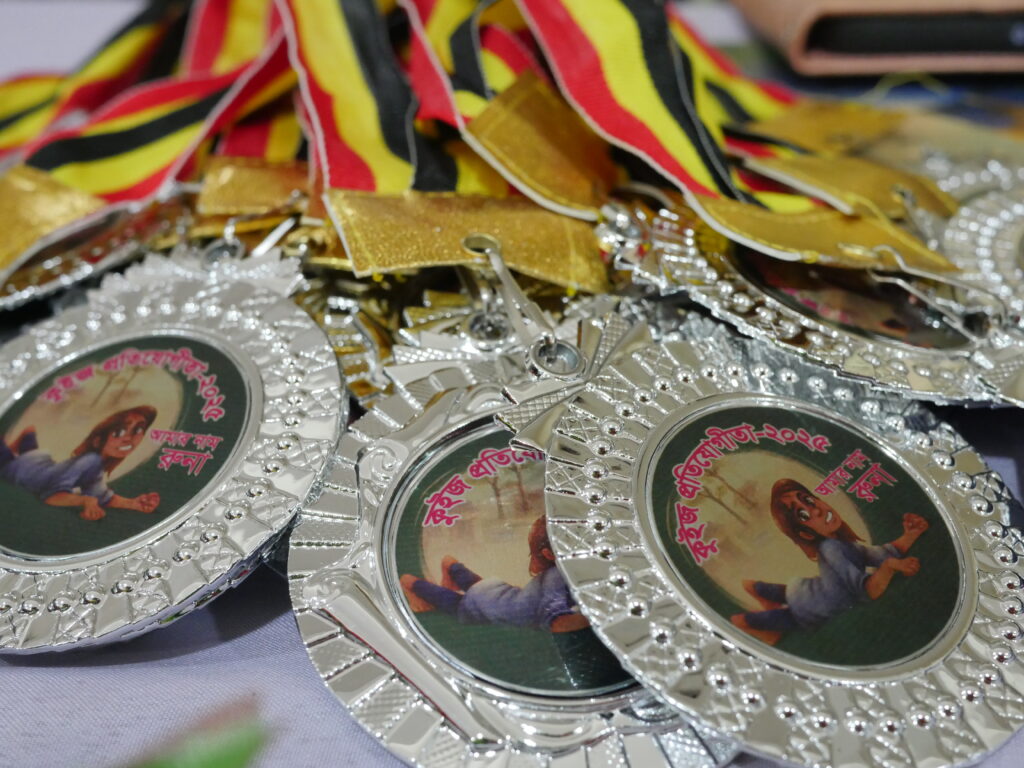
Quiz Competition 2025 on My Name is Runa Book

By: Nizam Uddin - Project Manager NGO DRRA
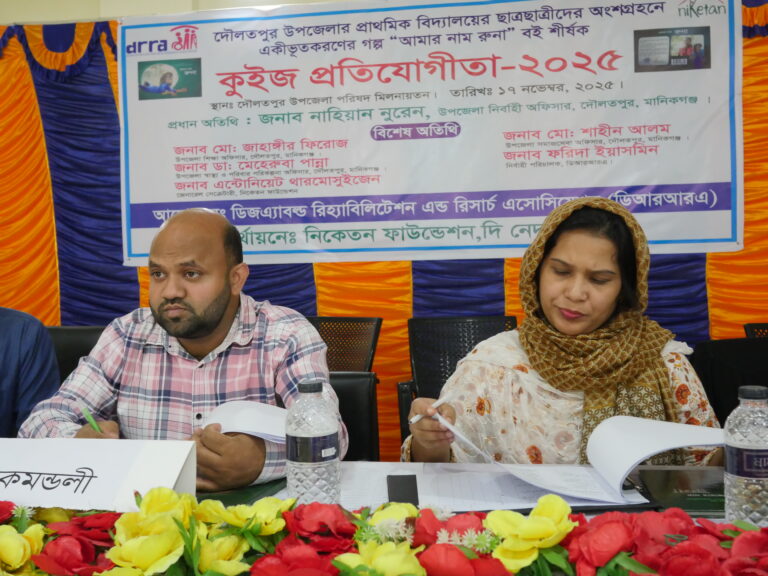
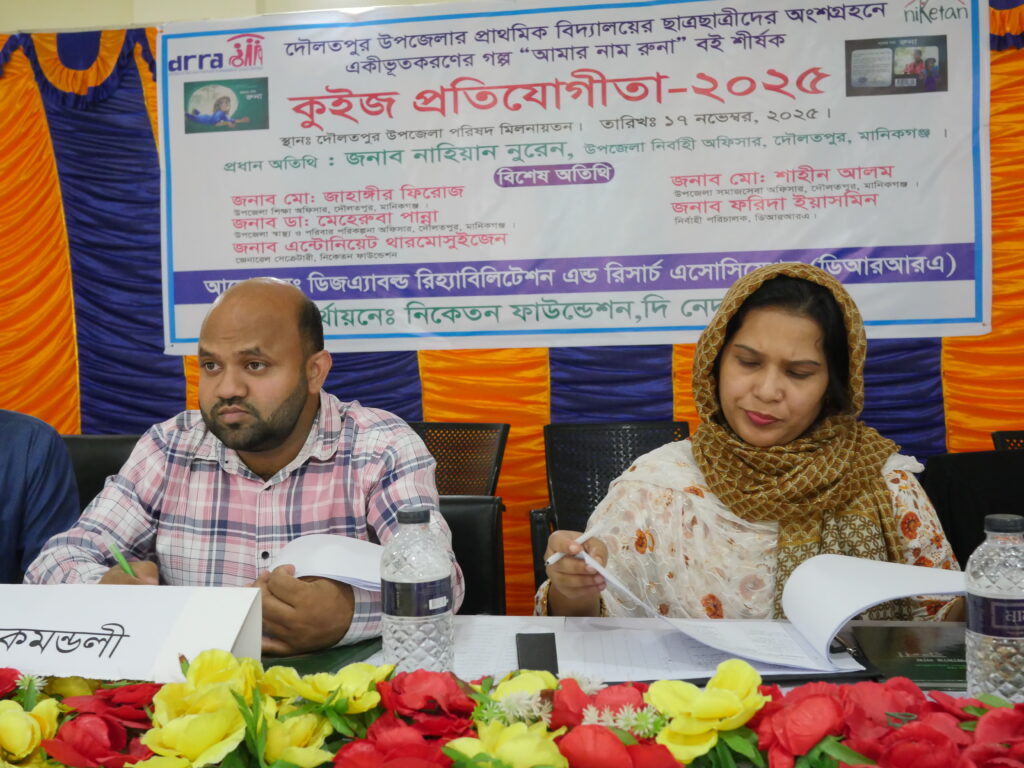
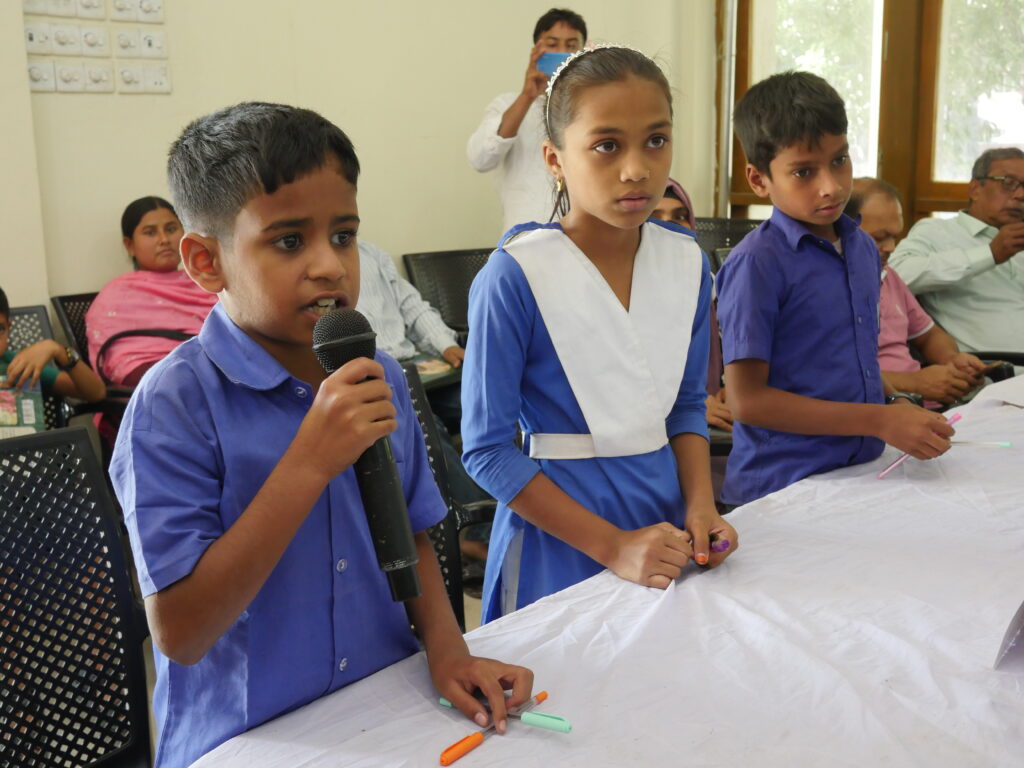
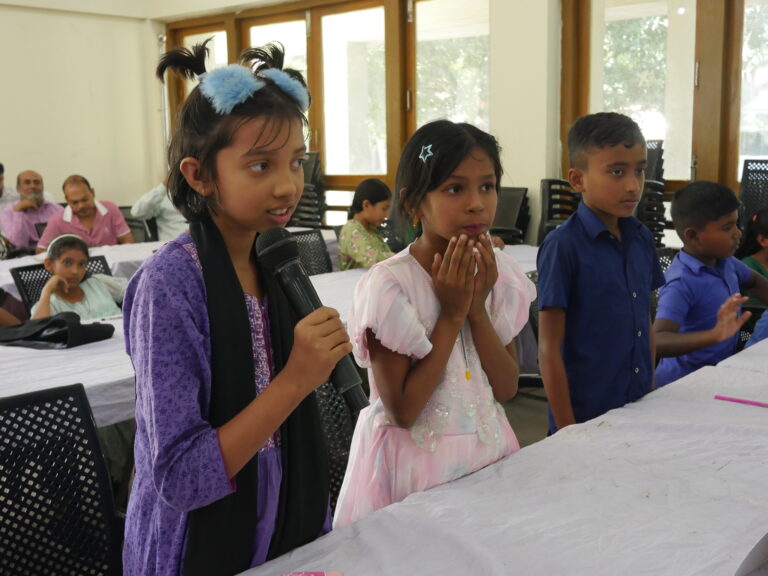
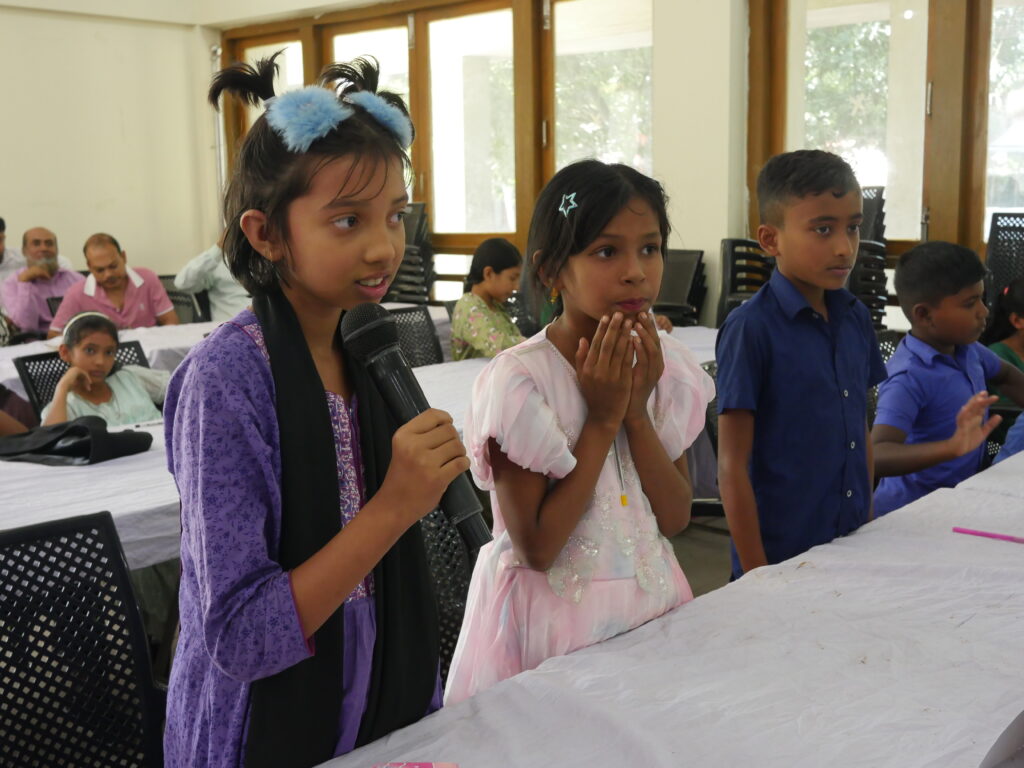
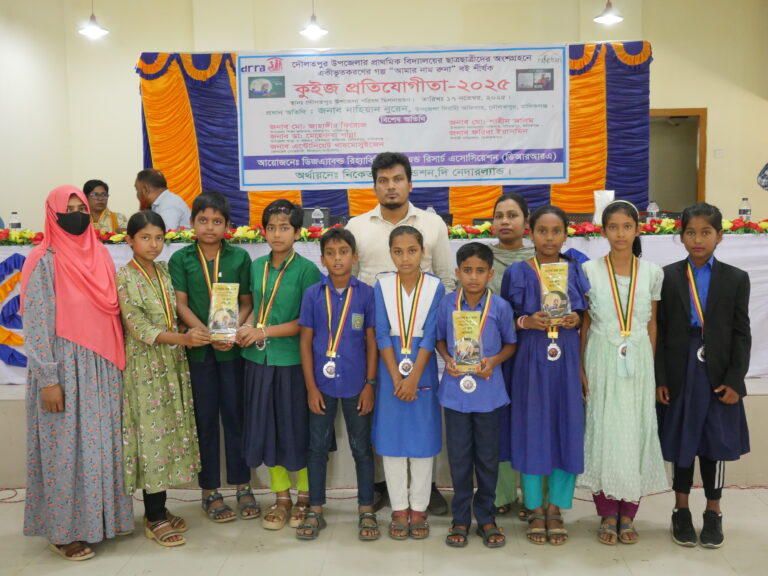
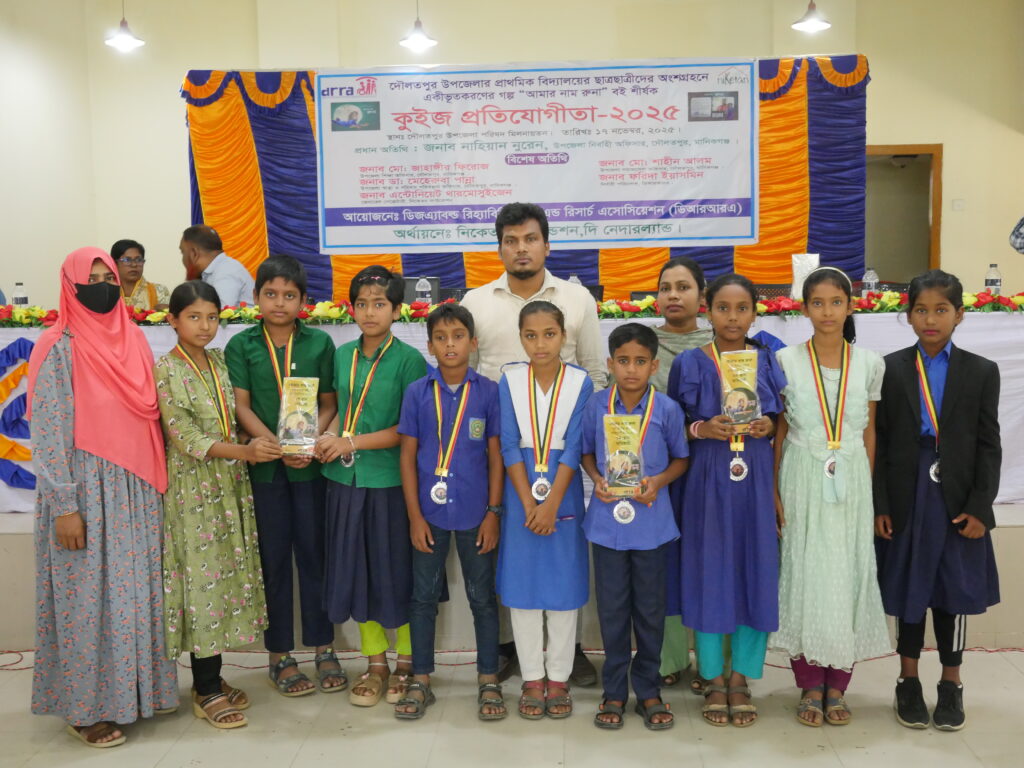
On 17 November 2025, DRRA, with financial support from Niketan Foundation, organized a quiz competition on the book My Name is Runa. The event aimed to raise awareness about disability, particularly cerebral palsy, and promote inclusive education among primary school students.

The competition brought together 60 participants from 20 government primary schools of Doulatpur Upazilla. Each school was represented by three students who answered three questions related to the book. Additionally, 20 teachers, one from each participating school, participated as “Disability Champions” assisting the students.

quiz quiz
Inauguration and Attendance
The quiz competition was inaugurated and presided over by Nahean Noor, Upazilla Nirbahi Officer (UNO), who also participated in the prize distribution session. Other dignitaries present included:

  • Md. Zahangir Firoz, Upazilla Education Officer
  • Md. Shahin Alam, Upazilla Social Service Officer, Doulatpur
  • Antoinette Termoshuizen, General Secretary, Niketan Foundation
  • DRRA official staff

The presence of these officials highlighted the importance of inclusive education and community engagement in disability awareness.

quiz quiz
Objectives of the Quiz Competition
The main objectives of the event were:

  1. To enhance children’s reading habits and comprehension skills through interactive learning.
  2. To encourage students to understand the key messages of My Name is Runa, particularly inclusion, self-confidence, and respect for persons with disabilities.
  3. To develop students’ critical thinking, listening, and teamwork abilities through a fun and educational competition.
  4. To promote awareness among young learners about diversity, empathy, and acceptance of differences in society.
  5. To strengthen engagement between DRRA, schools, and the local community in promoting inclusive education.

quiz quiz
Results
At the conclusion of the competition, the following schools secured top positions:

Sl. No Name of School Position Score
01. 28 No Bachamara Government Primary School 1st 30
02. 97 No Vorra Government Primary School 2nd 28
03. 47 No Parmastul Government Primary School 3rd 26

quiz quiz
Recommendations and Future Plans

  • Extend the quiz competition to all schools in Doulatpur Upazilla to increase awareness and student engagement.
  • Continue distributing My Name is Runa books to more students as part of inclusive education initiatives.
  • Encourage schools to appoint more teachers as Disability Champions to sustain learning on disability awareness.
  • Plan inter-Upazilla competitions to further motivate students and enhance peer-to-peer learning.

The “My Name is Runa” Reading Initiative in Ghior and Daulatpur
The story of Runa is now being shared with children in several villages in Ghior and Daulatpur. Every Friday, fifteen enthusiastic volunteers visit children in their own or neighboring villages to read aloud from the book “My Name is Runa.”

Many of these children do not have storybooks at home and rarely have the chance to put themselves in someone else’s shoes. Runa’s story shows them that children with and without disabilities share the same fears, dreams, and emotions.

Reading together is just the beginning—there is also plenty of fun and interaction. Children act out the story, sing, dance, and enjoy the experience together. Parents, neighbors, and other villagers also listen in, becoming more aware of the impact of bullying on children.

Through this activity, both children and adults learn about empathy, understanding, and inclusion in a playful and accessible way.


Hello

I am Runa.
“I have Cerebral Palsy and I live in Bangladesh. Because I walk and talk with difficulty, everyone calls me “an idiot”! Now I play the lead role in a storybook, in which I tell everyone what it is like to have a disability and to be teased. My story has a surprising end. I hope it helps to raise awareness about how it feels to grow up with a disability”
The book “My name is Runa” is based on the true story of Runa, an 18-year old girl in Bangladesh with Cerebral Palsy (CP). The story highlights her experiences growing up, both positive and negative. Runa, who is now a teaching assistant at the Niketan school for children with special needs in Dhaka, will visit mainstream schools in Bangladesh to talk about CP.